
Signs worth investigating
- Unexpected use outside normal operating hours
- Recurring moisture affecting occupied premises
- An unexplained change across multiple water branches
- A need to document findings for a manager or repair team
Define the business problem before choosing a method
A business may need to investigate a single recurring stain, a buried supply route or unexplained consumption across several buildings. Our leak detection in Pahrump service overview helps distinguish those scopes. Explain which operations are affected and what result you need from the inspection.
Identify who can approve testing, access and a possible interruption. A tenant may know where water appears without controlling a shared room or the external line. Bring the responsible owner, manager or system operator into the discussion before authorizing work on shared assets.
Separate the building systems
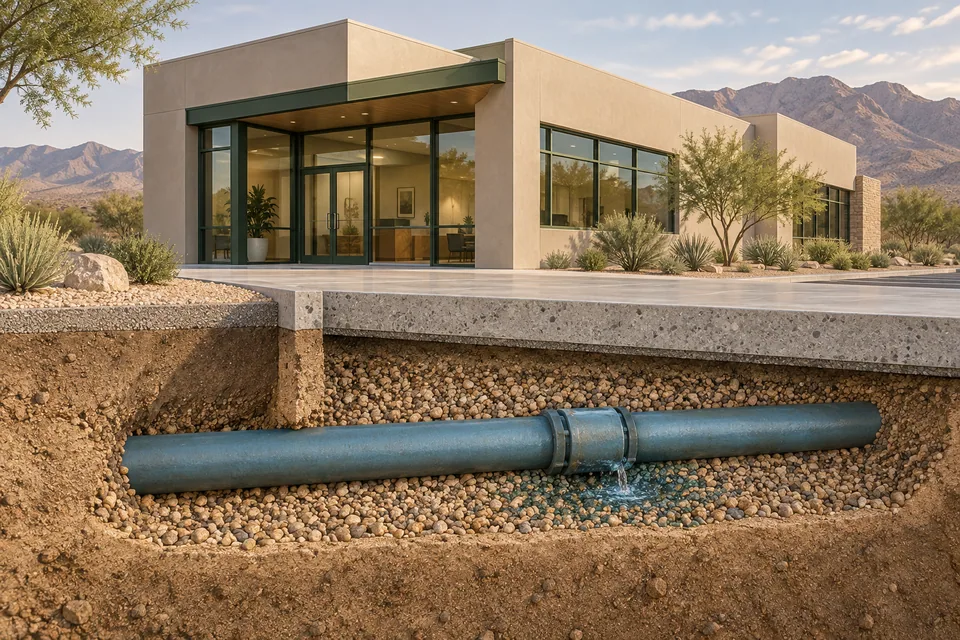
Use water-line investigation for supply-pipe concerns, wall and ceiling detection for concealed indoor moisture, and underground leak detection for a suspected external route.
Where several branches or buildings are involved, a commercial leak survey can establish what records, inspection areas and reporting belong in the scope. Irrigation, fire systems, private wells and specialist mechanical equipment must be identified separately; general plumbing acceptance does not establish capability for every asset.
Use water records to give the visit context
Compare reading periods, occupancy, cleaning and known equipment cycles before assuming the whole bill increase is a leak. A meter can include use from another tenant or an automatic process. Provide original readings, dates and units when available.
The meter-movement guide explains this distinction, while the water-use calculator can express a measured change as a comparable rate. These preparation tools support the discussion; they do not replace a site-specific assessment.
Plan access across the Pahrump property
For occupied units in Central Pahrump, give the suite and authorized contact. For an external line around North Pahrump or separate buildings in South Pahrump, explain entrances, routes and any known supply boundaries.
Discuss customer areas, loading access, quiet periods and restrictions on water interruption. A manager should agree what may be inspected and what requires separate permission. Ask how untested areas or access limitations will be recorded.
Agree on findings, fees and the repair handoff
Ask whether the inspection includes written findings, images or location marking, and what those records can and cannot establish. If another contractor will repair the fault, explain its information needs before the visit. Do not assume an inspection fee includes excavation, repair or restoration.
Use the detection and repair scope guide when comparing proposals, and the call-notes tool to keep the inquiry concise. The independent provider confirms commercial capability, appointment availability and pricing for the actual address.
Common questions
Can inspection be arranged around business hours?
Ask the provider about available appointments and the conditions its methods need. After-hours attendance is not assumed or guaranteed.
Can you investigate several tenant units?
A provider may accept that scope when access and authorization are in place. Specify all relevant spaces before booking.
Does a commercial survey include every system?
Only the systems agreed in its scope. Identify specialist equipment and restricted areas separately.
Planning a visit in the valley
The Central Pahrump area guide explains useful local access considerations. Explore the full Pahrump area guide for nearby places; the receiving provider confirms coverage for the exact address.
Continue with the next question
Useful reading for this inspection
Why is the water meter still moving?: a practical way to interpret meter observations without guessing at the cause. Leak detection vs. leak repair: compare scopes and plan the handoff from finding the source to fixing it.
Browse all leak-detection articles