
Signs worth investigating
- Wet ground when irrigation is off
- Unexplained use during a quiet operating period
- A pressure change with no obvious indoor leak
- Water appearing along a paved edge
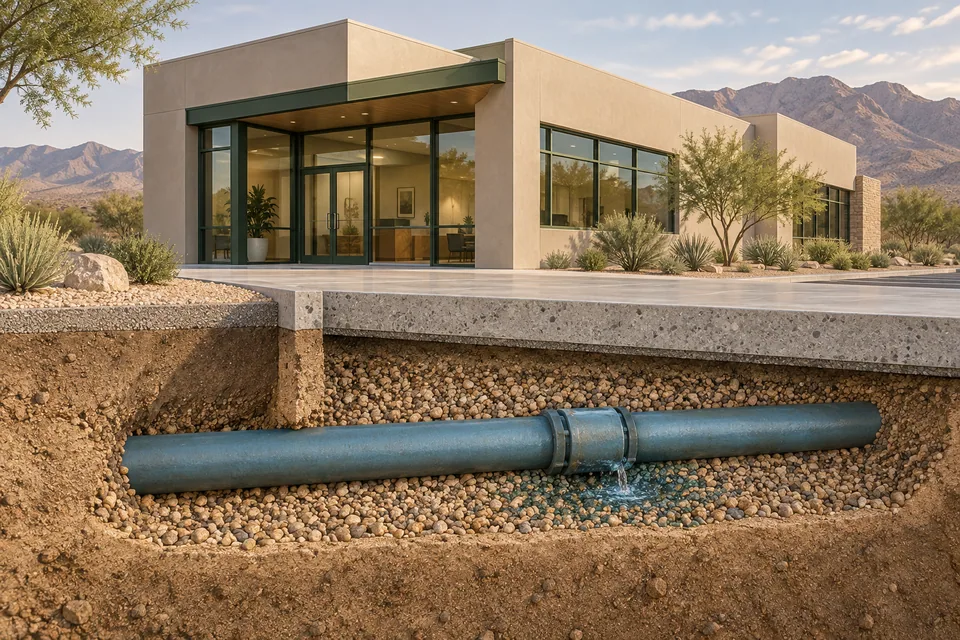
A buried leak needs a system-level investigation
A damp area does not necessarily sit directly above a broken pipe. Water can travel along a trench or under a hard surface before appearing elsewhere. The route of the pipe, the soil cover and the available access points all influence the investigation.
Our commercial leak-detection referral service in Pahrump helps you frame the problem before discussing an inspection with an independent provider. Describe whether the suspected pipe supplies the building, serves irrigation or connects separate structures.
How a provider may narrow the search
A provider may review plans, check accessible fittings, compare meter observations and isolate appropriate sections of the system. Acoustic listening can help identify the sound of escaping water. Its usefulness depends on pipe material, depth, pressure and surrounding noise.
For a line between the supply point and the building, see water-line leak detection. When the suspected route passes under an interior concrete floor, slab leak detection addresses different access and repair-planning questions. No method guarantees an exact location without further investigation.
Prepare access without starting excavation
Share any drawings, previous repairs, meter locations and known changes to the site. Identify locked gates, loading routes and areas where vehicles cannot be interrupted. Do not open utility equipment or start digging to investigate the suspected leak.
At properties around North Pahrump and Bell Vista Avenue, an entrance description and accessible water-system information can be more useful than a ZIP code alone. Ask the provider which part of the site can actually be tested.
What affects the inspection cost?
The length of the suspected route, surface access, number of branches, testing conditions and reporting requirements affect the scope. Ask whether locating, marking, a written report and a return visit are included. Excavation, pipe repair and surface restoration may be separate services.
Use the commercial leak-detection cost guide to compare scopes rather than assuming every quote includes the same work.
Common questions
Does detection always avoid digging?
An inspection may reduce exploratory digging, but opening a surface can still be necessary to confirm the fault or carry out repairs. Agree on permission and costs before intrusive work.
Can a leak be found in plastic pipe?
Sometimes. Pipe material affects the available methods and the way sound travels. Give the provider the material if known and ask about limitations.
Will the same company repair the pipe?
That depends on the independent provider. Detection, excavation and repair are separate scopes unless the provider explicitly includes them.
Planning a visit in the valley
The North Pahrump area guide explains useful local access considerations. Explore the full Pahrump area guide for nearby places; the receiving provider confirms coverage for the exact address.