
Signs worth investigating
- A water-use change without an obvious explanation
- Recurring floor or wall moisture
- A damp yard outside watering periods
- A suspected hidden hot- or cold-water leak
Start with the home and the symptom
Our leak detection in Pahrump information brings together indoor and underground plumbing concerns. A homeowner does not need to identify the pipe before calling. Explain where you first noticed the issue, when it occurs and whether anything changed recently.
Describe the type of property, occupied rooms, pets, gates and any previous repairs. For a rental, involve the person authorized to approve inspection and access. A neighborhood name is useful orientation, but the full street address is needed to arrange a visit.
Match the concern to the relevant investigation
A suspected line beneath concrete fits slab leak detection. For water appearing along an outdoor route, explore underground water-leak detection. A recurring stain or damp wall may need concealed-plumbing investigation.
If the concern is usage rather than visible water, compare recent readings with the water-bill checklist. A toilet refill or automatic appliance can contribute to consumption. The hidden-leak signs guide helps keep observations separate from conclusions.
What to expect from the inspection discussion
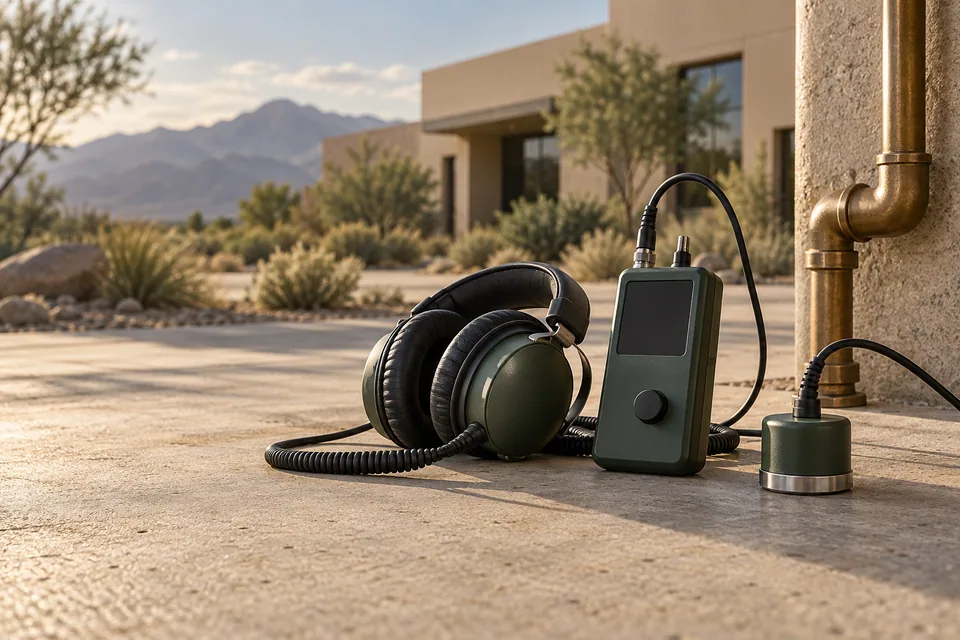
Ask how the provider would assess the suspected system, what access it needs and which conditions could limit the result. Acoustic listening, thermal imaging and suitable system checks may contribute different information. The provider should select an appropriate method for the home rather than promise that one tool always finds every leak.
Before opening a surface, agree on authorization and cost. Detection does not automatically include repairing the pipe or restoring finishes. Ask whether a written description, photographs or a marked area are included, especially if a different contractor will complete the repair.
Pahrump neighborhoods and property access
The Central Pahrump and North Pahrump guides cover address and access planning. Around Mountain Falls and Artesia at Hafen Ranch, explain whether the concern is inside your home or involves a shared asset.
Use the 89048, 89060 and 89061 ZIP guide to organize the address. ZIP codes are postal references, not proof that a particular provider accepts a job. State any private well, irrigation or other specialist system at the start.
Prepare a clear request and compare the scope
Have your symptom timeline and existing records ready. The inspection preparation checklist helps you gather useful details without conducting invasive tests yourself. Confirm the business name, inspection fee, methods and appointment directly.
Review what affects a leak-detection quote and ask what happens if further access or a return visit is needed. If water is actively escaping, use the active-water-leak guidance and your appropriate emergency contacts for immediate hazards.
Common questions
Can I call if I cannot see the leak?
Yes. Describe unexplained water use or recurring symptoms and ask whether the provider can investigate the relevant system.
Is residential detection automatically included in every referral?
No. Confirm the property, system and address with the receiving provider before agreeing to a visit.
Will the inspection include pipe repair?
Only if the provider explicitly includes it. Ask about access, repair and finish restoration as separate parts of the scope.
Planning a visit in the valley
The Central Pahrump area guide explains useful local access considerations. Explore the full Pahrump area guide for nearby places; the receiving provider confirms coverage for the exact address.
Continue with the next question
Useful reading for this inspection
Signs of a hidden water leak: separate useful warning signs from assumptions about where a pipe is leaking. Prepare for a leak-detection visit: a practical checklist for homeowners, landlords and facility managers.
Browse all leak-detection articles