
The useful answer
Describe when moisture appears and which fixtures are in use; ask which system the inspection will test.
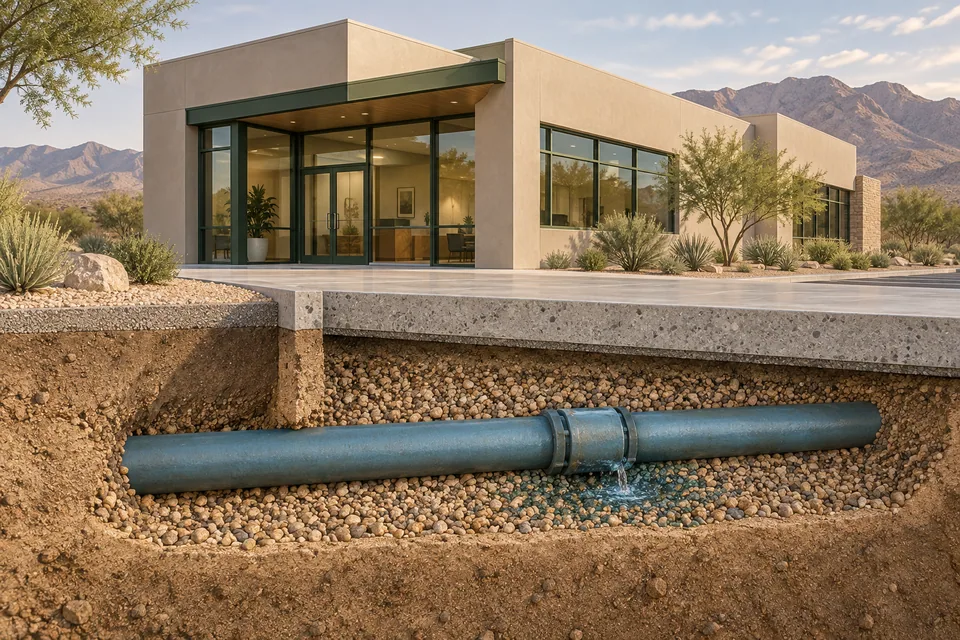
A supply leak and a drainage leak behave differently
A supply pipe carries water toward fixtures. A drain carries water away after use. A leak in a pressurized supply can continue even between fixture uses; a drainage problem may become apparent during or after a fixture drains. Those patterns help frame questions but cannot conclusively identify the pipe.
Tell the provider whether dampness changes after a shower, laundry cycle, kitchen use or a quiet overnight period. In a commercial building, multiple fixtures or tenants can obscure the pattern. Record what is known without running repeated tests that might spread water.
Which observations belong in the inquiry?
Useful details include the first location noticed, the finish over the slab, whether the area is warm, nearby fixtures and any supply-meter change. A warm patch may justify investigating hot-water plumbing; it is not enough to diagnose a failed line. Moisture can move beneath flooring before becoming visible.
The hidden-leak signs guide explains the limits of individual symptoms. For suspected supply piping, slab leak detection in Pahrump is the relevant service discussion. Clearly identify a suspected drain problem so the provider can confirm whether it handles that work.
Agree on the investigation before intrusive access
Ask what the initial inspection covers, which systems can be tested and what evidence would justify opening the floor. A drain-camera inspection is not the same as locating a pressurized water-line leak. Similarly, a temperature pattern does not establish the precise depth or route of a buried pipe.
Our comparison of thermal and acoustic methods explains why different tools answer different questions. A provider may combine observations with appropriate tests, subject to site conditions and access.
Keep detection, repair and reinstatement separate
Before accepting work, ask who will authorize access, repair the pipe and restore the surface. Our detection-versus-repair checklist keeps these decisions separate so you can compare scopes fairly. Agree on how findings and limitations will be communicated.
For leak detection in Pahrump, share the property type and neighborhood as well as the symptom. At a home, mention occupied rooms and flooring; at a business, include customer access and operating hours. Neither the slab layout nor pipe materials should be assumed from a Pahrump ZIP code alone.
Common questions
Does a normal meter reading rule out every leak?
No. A supply meter observation cannot rule out all intermittent leaks, drainage problems or non-plumbing moisture sources.
Is concrete removal always necessary?
Not necessarily for the initial investigation. Confirmation or repair may need access; discuss the proposed method and authorization first.
Continue with the next question
Useful reading for this inspection
Thermal vs. acoustic leak detection: what each tool can tell you—and what still needs confirmation. Leak detection vs. leak repair: compare scopes and plan the handoff from finding the source to fixing it.
Browse all leak-detection articles